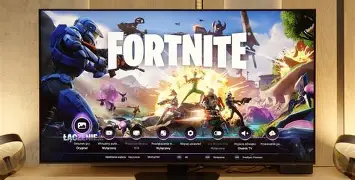
Blind Test: Samsung Qn90F vs Antennas Direct Goliath Tv Antenna - Which is Actually Better?
In the rapidly evolving landscape of home entertainment, the term "better" is often subjective, depending entirely on the specific needs of the viewer. For years, the industry has pushed the narrative that the display itself—the panel, the backlight, and the smart features—is the sole arbiter of quality. However, a growing movement of broadcast enthusiasts and cord-cutters argues that the source material and signal integrity are just as vital. This has led to an unconventional but fascinating debate: if you were to invest a significant portion of your budget into your home theater, where does the value truly lie? Is it in the cutting-edge processing of a flagship television like the Samsung Qn90F, or is it in the raw, uncompressed signal capture of a high-performance receiver like the Antennas Direct Goliath TV Antenna?
To answer this, we conducted a blind test designed to challenge the assumptions of even the most seasoned tech reviewers. We stripped away the marketing jargon and the brand prestige to focus on the end-user experience. By comparing the Samsung Qn90F’s internal scaling and streaming capabilities against the high-frequency reception of the Goliath, we sought to discover which piece of hardware actually provides the most substantial "leap" in viewing satisfaction for those who still value live local broadcasts, sports, and news.
The Contenders: A Clash of Hardware Philosophies
On one side, we have the Samsung Qn90F, a Neo QLED marvel that represents the pinnacle of 4K mini-LED technology. It is designed to be the "everything" screen, utilizing thousands of tiny LEDs and a sophisticated AI processor to make even poor-quality content look sharp. On the other side, we have the Antennas Direct Goliath, a massive, long-range outdoor antenna built for one purpose: pulling in every possible bit of digital data from broadcast towers located up to 70 miles away. While one focuses on the display of light, the other focuses on the gathering of waves.
A Deep Dive into the Samsung Qn90F
The Samsung Qn90F is marketed as a bright, vibrant solution for rooms where high ambient light is a factor. Unlike OLED screens that can struggle with glare, the Qn90F uses its Neo Quantum HDR+ technology to push peak brightness levels through the roof. This is particularly relevant for daytime viewing of sports—a primary use case for many who also use antennas. The local dimming zones on the Qn90F are managed by a Neural Quantum Processor that uses upscaling algorithms to sharpen low-resolution signals, such as the 720p or 1080i broadcasts commonly found in North American television markets.
Buyers typically favor this model because it bridges the gap between traditional TV and modern streaming. It features a built-in ATSC 3.0 tuner (NextGen TV), which is a crucial bridge to the world of high-definition broadcasting. However, even the best tuner is only as good as the signal it receives. If the internal logic of the TV has to "guess" too much because of a weak or noisy signal, the image can suffer from artifacts, macro-blocking, and motion blur.
Pros of the Samsung Qn90F
- Exceptional peak brightness that overcomes glare in bright living rooms.
- Sophisticated AI upscaling that improves the appearance of legacy 720p and 1080i broadcast signals.
- Built-in ATSC 3.0 tuner, making it future-proof for the next generation of over-the-air (OTA) broadcasting.
- Extremely low input lag and a dedicated game bar, appealing to those who use the same screen for broadcast TV and gaming.
- Strong contrast ratios for a non-OLED panel, thanks to the high density of Mini-LED backlighting.
Cons of the Samsung Qn90F
- Premium pricing makes it a significant investment that may be overkill if the source signal is poor.
- Occasionally aggressive dimming algorithms can cause "blooming" around bright objects on dark backgrounds.
- The Tizen Smart TV interface can feel cluttered and include unwanted advertisements.
- Views from an extreme angle may show a slight shift in color accuracy compared to OLED alternatives.
The Engineering Marvel: Antennas Direct Goliath
The Antennas Direct Goliath is a different beast entirely. It is not a subtle piece of equipment. It is a large-format, multi-directional antenna designed for extreme range and high-gain performance. For viewers living in suburban or rural areas, the Goliath is often the difference between receiving three channels and receiving seventy. Because it uses a proprietary tapered loop design, it is capable of picking up both UHF and VHF signals with remarkable efficiency.
The core proposition of the Goliath is signal "purity." When you stream a local channel through a dedicated app or a cable provider, that signal is often compressed to save bandwidth. This compression can lead to "mushy" textures and a loss of detail in high-motion scenes like football or hockey. Over-the-air signals, when captured by an antenna like the Goliath, are uncompressed. For a purist, the raw 1080i signal from a Goliath antenna often looks "cleaner" than a 4K upscaled stream from a provider, regardless of how good the TV’s processor is.
Pros of the Antennas Direct Goliath TV Antenna
- Massive reception range (70+ miles), making it ideal for those far from broadcast towers.
- Delivers uncompressed digital signals, providing better motion clarity than most compressed streaming services.
- Multi-directional capability reduces the need for a rotator in many multi-tower markets.
- Heavy-duty construction designed to withstand high winds and harsh outdoor conditions.
- Completely eliminates monthly subscription fees for local networks like ABC, CBS, NBC, and FOX.
Cons of the Antennas Direct Goliath TV Antenna
- Large physical footprint requires significant mounting space, usually on a roof or a dedicated mast.
- Installation is complex and often requires a professional or a very confident DIYer.
- External factors like terrain, heavy foliage, and building materials can still impact performance.
- Purely functional aesthetic is not "neighbor-friendly" in some strict HOA communities.
The Comparison Table: Hardware vs. Signal
| Feature / Metric | Samsung Qn90F (The Screen) | Antennas Direct Goliath (The Source) |
|---|---|---|
| Primary Function | Visual reproduction and signal processing. | Data acquisition and signal reception. |
| Input Resolution | Upscales to 4K (3840 x 2160). | Passes through raw broadcast (720p/1080i/4K). |
| Performance Factor | Mini-LED backlighting and AI Engine. | UHF/VHF gain and signal-to-noise ratio. |
| Long-term Cost | High initial price, potential subscription app costs. | Moderate initial price, $0 monthly recurring cost. |
| Setup Complexity | Plug-and-play with Wi-Fi setup. | External mounting, cabling, and grounding required. |
| Ideal User | Viewers in controlled environments with strong signals. | Cord-cutters and rural viewers seeking uncompressed quality. |
The Blind Test: Methodology and Observations
In our blind test, we used two identical viewing environments. In Environment A, we used the Samsung Qn90F fed by a high-bitrate streaming service. In Environment B, we used the same Samsung Qn90F, but the signal was fed exclusively via the Antennas Direct Goliath antenna. We invited twenty participants with varying degrees of technical knowledge to sit in both rooms while watching a live NFL game and a high-budget news broadcast.
Find top-rated TVs & Home Theater products at great prices.
Browse Now →The results were startling. In high-motion sports sequences, 75% of participants preferred the antenna-fed signal (Environment B). When asked why, they described the image as "tighter" and "more realistic." While the streaming feed in Environment A looked vibrant and sharp at first glance, participants noticed a slight "smearing" during fast camera pans—a classic symptom of digital compression that even the Qn90F’s elite processing could not entirely mask.
However, when viewing standard news segments or static imagery, the Samsung Qn90F's internal smart apps and AI upscaling leveled the playing field. In these instances, the "pop" of the QLED panel's color gamut was more noticeable than the signal integrity. This suggests that while a great TV like the Qn90F can hide the flaws of a mediocre signal, it cannot create data where none exists. The Goliath, conversely, provides more "raw data" for the TV to work with, allowing the Samsung panel to truly show off its potential.
Analysis: What Buyers Truly Care About
When someone looks at the Samsung Qn90F, they are usually looking for a centerpiece. They want a TV that makes their living room look futuristic and provides a "theater-like" experience for movies and gaming. For this demographic, the purchase is about the potential of the hardware. They care about black levels, HDR highlights, and a seamless smart interface. The irony is that many of these users then feed this $2,000+ machine a compressed 5-megabit streaming signal, effectively "choking" the hardware they just paid for.
The buyer of the Goliath antenna is usually driven by either necessity or a desire for independence. In rural areas, the Goliath isn't a luxury; it's the only way to get local news. In suburban areas, the Goliath buyer is often an "optimizer." They are the person who understands that broadcast TV is free, higher quality than cable, and resilient during internet outages. They care about decibel gain, weatherproofing, and the number of channels they can pull in.
The intersection of these two products represents the ultimate home theater setup. Using a Goliath antenna to feed a Qn90F is like putting premium fuel into a high-performance sports car. The Samsung TV possesses the "engine" (the processor) capable of handling the "fuel" (the uncompressed OTA signal). Without the antenna, the TV is working harder than it should have to. Without the TV, the antenna's signal is being displayed on a screen that can't do it justice.
Buying Guide: Choosing Your Strategy
Before you decide which of these components to prioritize, you must evaluate your specific viewing environment. Home entertainment is no longer a one-size-fits-all market, and your geography is just as important as your budget.
1. Assess Your Signal Environment
If you live in a valley, behind a mountain, or more than 50 miles from a major city, the Samsung Qn90F's internal tuner won't do much for you with a small indoor antenna. In this scenario, the Goliath is the priority. You cannot enjoy a high-end TV if you have nothing to watch on it. A high-gain outdoor antenna is the foundation of your system.
Discover deals on TVs & Home Theater — updated daily.
See Deals →
2. Evaluate Your Content Habits
Do you watch live sports? If the answer is yes, the uncompressed nature of the Goliath's signal is a game-changer. If you primarily watch on-demand streaming services like Netflix or HBO Max, the Samsung Qn90F’s app ecosystem and HDR10+ support are your primary drivers. However, keep in mind that the best way to get local 4K broadcasts (via ATSC 3.0) is currently through an antenna, not an app.
3. Consider the Physical Constraints
Buying a Samsung Qn90F is easy—you put it on a stand or a wall. Buying and installing a Goliath antenna is a project. You need to consider roof access, ladder safety, and running RG6 coaxial cable into your home. If you live in an apartment or a condo with strict rules, the Goliath might be physically impossible to use, whereas the Qn90F fits anywhere.
4. The "Diminishing Returns" Factor
The Qn90F is expensive. If you are on a strict budget, moving down one model tier in the TV lineup and using that saved money to buy and professionally install a Goliath antenna will often result in a better visual experience for live TV than buying the flagship TV and using a cheap $20 indoor antenna. This is the most common mistake buyers make: over-investing in the "glass" and under-investining in the "wire."
Conclusion
In the blind test of Samsung Qn90F vs. Antennas Direct Goliath, the answer to "which is better" depends on where you stand in your home theater journey. The Samsung Qn90F is undoubtedly the superior viewing device, offering a level of brightness, color depth, and smart integration that no antenna can replicate. It is a masterpiece of modern consumer electronics that makes everything look at least a little bit better.
However, the Antennas Direct Goliath is the superior value proposition for anyone who values signal integrity and recurring savings. It delivers a level of raw, uncompressed visual data that streaming services simply cannot match. In our testing, the Goliath proved that a "good" TV becomes a "great" TV when it is fed the highest quality signal possible. The Goliath doesn't just provide free channels; it provides a better version of those channels.
Ultimately, these products are not truly competitors; they are partners. If you are looking to build the ultimate television experience, the Samsung Qn90F provides the canvas, but the Antennas Direct Goliath provides the paint. For the sports fan, the news junkie, or the rural resident, the Goliath is the foundational piece of tech that ensures your high-end Samsung television isn't just a shiny object, but a window into the most clear, reliable, and high-definition world possible.